Showing posts with label Hazards. Show all posts

Mount Etna Erupts Again

Europe's largest volcano Mount Etna in Sicily has erupted again - the fifth time this year that it has been active.


Ash was spread around the local area, but it did not disrupt air traffic.
Etna, which is 11,000ft high and located 18 miles above the Sicilian town of Catania, often erupts but rarely causes damage.


And here is the video thanks to Telegraph.co.uk:
You have read this article Disasters / Hazards / Mountains / Movies with the title Hazards. You can bookmark this page URL http://lettersfromladygodiva.blogspot.com/2012/04/mount-etna-erupts-again.html. Thanks!

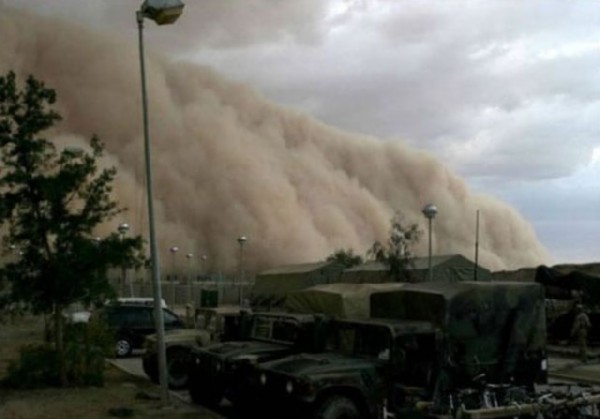
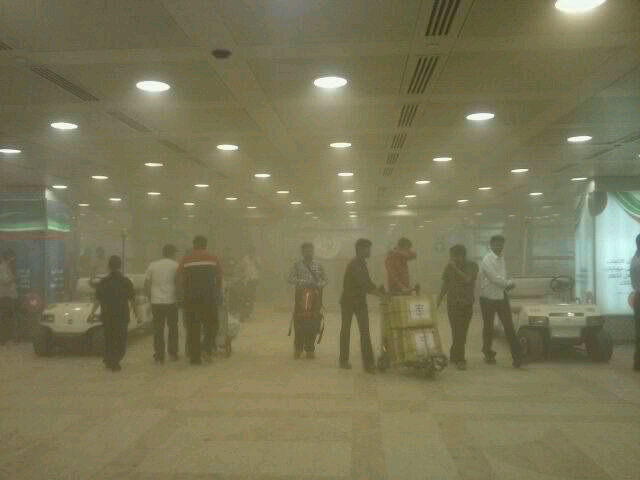
Amazing Sandstorm In Kuwait

At approximately 5.30 PM (GMT +3) a dust storm swept through Kuwait turning the setting evening sun to immediate darkness reaching minimal visibility in mere minutes. What first seemed to be smoke from a burning building, everyone soon started running for cover. Here's one of the first glimpse of, ironically, a rare spectacle, considering the location of the country!


Also, check this amazing video of Kuwait sandstorm:

You have read this article Disasters / Hazards / Movies with the title Hazards. You can bookmark this page URL http://lettersfromladygodiva.blogspot.com/2012/03/amazing-sandstorm-in-kuwait.html. Thanks!

Hurricane Pictures By Mitch Dobrowner

The pictures of hurricanes and tornadoes in America which were taken by the photographer Mitch Dobrowner from New York.


You have read this article Hazards with the title Hazards. You can bookmark this page URL http://lettersfromladygodiva.blogspot.com/2012/03/hurricane-pictures-by-mitch-dobrowner.html. Thanks!

Tornado Formation Caught On Security Camera


Not something you see everyday.
You have read this article Disasters / Hazards / Movies with the title Hazards. You can bookmark this page URL http://lettersfromladygodiva.blogspot.com/2012/03/tornado-formation-caught-on-security.html. Thanks!

Underwater or Submarine Volcanoes, Eruption Pictures

Submarine volcanoes are underwater fissures in the Earth's surface from which magma can erupt. They are estimated to account for 75% of annual magma output. The vast majority are located near areas of tectonic plate movement, known as ocean ridges. Although most are located in the depths of seas and oceans, some also exist in shallow water, which can spew material into the air during an eruption. Hydrothermal vents, sites of abundant biological activity, are commonly found near submarine volcanoes.

The presence of water can greatly alter the characteristics of a volcanic eruption and the explosions made by these. For instance, the increased thermal conductivity of water causes magma to cool and solidify much more quickly than in a terrestrial eruption, often turning it into a volcanic glass. Below ocean depths of about 2200 metres where the pressure exceeds 218 atmospheres, the critical pressure of water, it can no longer boil; it becomes a supercritical fluid. Without boiling sounds, deep-sea volcanoes are difficult to detect at great distances using hydrophones.

The lava formed by submarine volcanoes is quite different from terrestrial lava. Upon contact with water, a solid crust forms around the lava. Advancing lava flows into this crust, forming what is known as pillow lava.
Scientists still have much to learn about the location and activity of underwater volcanoes. The Kolumbo underwater volcano in the Aegean Sea was discovered in 1650 when it burst from the sea and erupted, killing 70 people on the nearby island of Santorini.


More recently, NOAA's Office of Ocean Exploration has funded missions to explore submarine volcanoes. Most notably, these have been the Ring of Fire missions to the Mariana Arc in the Pacific Ocean. Using Remote Operated Vehicles, scientists studied underwater eruptions, ponds of molten sulfur, black smoker chimneys and even marine life adapted to this deep, hot environment.


Spewing clouds of smoke, ash and steam thousands of feet into the sky, these dramatic images show the raw power of an undersea volcano erupting.
The spectacular columns blasted out of the South Pacific six miles off the coast of Tonga's main island Tongatapu. Tonga, a 170-island archipelago about halfway between Australia and Tahiti, is part of the Pacific 'ring of fire' - an arc of earthquake and volcanic zones stretching from Chile in South America through Alaska and down through Vanuatu to Tonga.


 Visible from space: The puff of white is the eruption in Tonga captured by a satellite orbiting Earth


You have read this article Hazards / Mountains / water with the title Hazards. You can bookmark this page URL http://lettersfromladygodiva.blogspot.com/2012/02/underwater-or-submarine-volcanoes.html. Thanks!

Waterspouts or Water Tornadoes


A waterspout is an intense columnar vortex (usually appearing as a funnel-shaped cloud) that occurs over a body of water and is connected to a cumuliform cloud. In the common form, it is a non-supercell tornado over water. While it is often weaker than most of its land counterparts, stronger versions spawned by mesocyclones do occur. Waterspouts do not suck up water; the water seen in the main funnel cloud is actually water droplets formed by condensation. While many waterspouts form in the tropics, locations at higher latitude within temperate zones also report waterspouts, such as Europe and the Great Lakes. Although rare, waterspouts have been observed in connection with lake-effect snow precipitation bands.
Waterspouts have a five-part life cycle: formation of a dark spot on the water surface, spiral pattern on the water surface, formation of a spray ring, development of the visible condensation funnel, and ultimately decay.


Non-tornadic
Waterspouts that are not associated with a rotating updraft of a supercell thunderstorm are known as "non-tornadic" or "fair-weather waterspouts", and are by far the most common type. Fair-weather waterspouts occur in coastal waters and are associated with dark, flat-bottomed, developing convective cumulus towers. Waterspouts of this type rapidly develop and dissipate, having life cycles shorter than 20 minutes. They usually rate no higher than EF0 on the Enhanced Fujita scale, generally exhibiting winds of less than 30 m/s (67 mi/h). They are most frequently seen in tropical and sub-tropical climates, with upwards of 400 per year observed in the Florida Keys. They typically move slowly, if at all, since the cloud they are attached to is horizontally static, being formed by vertical convective action instead of the subduction/adduction interaction between colliding fronts. Fair-weather waterspouts are very similar in both appearance and mechanics to landspouts, and largely behave as such if they move ashore.

Tornadic
"Tornadic waterspouts", also accurately referred to as "tornadoes over water", are formed from mesocyclonic action in a manner essentially identical to traditional land-based tornadoes in connection with severe thunderstorms, but simply occurring over water. A tornado which travels from land to a body of water would also be considered a tornadic waterspout. Since the vast majority of mesocyclonic thunderstorms occur in land-locked areas of the United States, true tornadic waterspouts are correspondingly rarer than their fair-weather counterparts. However, in some areas, such as the Adriatic, Aegean and Ionian seas, tornadic waterspouts can make up half of the total number.

Snowspout
A winter waterspout, also known as a snow devil, an icespout, an ice devil, a snonado, or a snowspout, is an extremely rare instance of a waterspout forming under the base of a snow squall. The term "winter waterspout" is used to differentiate between the common warm season waterspout and this rare winter season event. Very little is known about this phenomenon and only six known pictures of this event exist to date, four of which were taken in Ontario, Canada. There are a couple of critical criteria for the formation of a winter waterspout. Extremely cold temperatures need to be present over a body of warm water enough to produce fog resembling steam above the water's surface; this requires a 19°C (34°F) temperature difference between the water and the invading surface air mass. Like the more efficient lake-effect snow events, winds focusing down the axis of long lakes enhance wind convergence and likely enhance their development.


Waterspouts have long been recognized as serious marine hazards. Stronger waterspouts are usually quite dangerous, posing threats to ships, planes, helicopters, and swimmers. It is recommended to keep a considerable distance from these phenomena, and to always be on alert through weather reports. The United States National Weather Service will often issue special marine warnings when waterspouts are likely or have been sighted over coastal waters, or tornado warnings when waterspouts are expected to move onshore. When close to shorelines, waterspouts can devastate nearby coral reefs and marine organisms close to the surface.
You have read this article Disasters / Hazards with the title Hazards. You can bookmark this page URL http://lettersfromladygodiva.blogspot.com/2011/10/waterspouts-or-water-tornadoes.html. Thanks!

Lightning Hits A Tree


This is the most amazing lightning strike you will ever see. Lightning hit a tree approximately 20 feet from the camera. The tree died a few months after the strike.
You have read this article Hazards / Movies / Sky with the title Hazards. You can bookmark this page URL http://lettersfromladygodiva.blogspot.com/2007/05/lightning-hits-tree.html. Thanks!

Beautiful Pictures From Around The World


Amazing pictures. Enchanted by Photoshop a little bit, but I don't mind. :)
You have read this article Beautiful Locations / Hazards / Plants / Sky with the title Hazards. You can bookmark this page URL http://lettersfromladygodiva.blogspot.com/2007/04/beautiful-pictures-from-around-world.html. Thanks!
Related Posts Plugin for WordPress, Blogger...